There was no family meeting. No declaration. No dramatic decision to reclaim our home from screens or reset screen time.
My kids just… stopped playing video games for nearly two weeks.
Not because I banned them. Not because we had a sudden revelation about technology. It simply didn’t come up as the break progressed. To be fair, day one did involve game time — but the excitement and schedules surrounding the holidays, followed by the post‑unwrap comedown, shifted attention toward new toys, outdoor play, or simply finding ways to escape the noise.
At first, I barely noticed the absence of game requests. And when I did, I felt that subtle sense of pride many mothers will recognize—the quiet reassurance that maybe I was doing something right.
But motherhood has a way of interrupting tidy narratives.
Because when school routines returned and expectations resurfaced, conflict followed — a familiar moment for many parents navigating screen time, routines, and emotional regulation. And instead of clarity, I found myself asking deeper questions—not about screens, but about presence, stress, faith, and permission.
When Presence Doesn’t Feel Peaceful in Motherhood
I was home. I was present. I had slowed my work commitments and oriented my attention toward family life.
And yet, I was exhausted.
This is the tension few of us say out loud: presence sounds beautiful in theory, but lived presence can feel loud, overstimulating, and unfinished. You can give your full attention and still feel like the experience is slipping through your fingers.
As mothers, we’re often told that showing up is the answer. That if we’re present enough, intentional enough, and engaged enough, everything will feel meaningful and right.
But what happens when it doesn’t?
For me, it often looks like the cabinet in our house that is overflowing with board games. I am the mom who excitedly suggests family time — convinced that if we just come together on the carpet or around the coffee table, some movie‑style moment will unfold. Smiles. Connection. Memories. Can't you picture it?
Instead, within minutes, I’m refereeing.
Who goes first. You went first last time. That’s not fair.
Someone is already spiraling because five minutes in they’ve decided they’re going to lose anyway. Someone else is shouting “stop capping” — which, to this day, I’m still not entirely sure what it means.
And there I am, not basking in togetherness, but white‑knuckling my patience, wondering how something so well‑intentioned devolved so quickly. The truth? In those moments, instead of wanting to snuggle my kids, I just want to flip the board game into the air.
That’s the version of presence we don’t post about.

What presence sometimes feels like.
The Uncomfortable Question: Am I Martyring Myself as a Mom?
As I reflected on winter break and the accidental video game fast that unfolded, some uncomfortable questions surfaced:
Did I prevent video games on purpose? And, if so, did it actually serve my family—or was I quietly absorbing unnecessary stress in the name of being a “good” mom?
This isn’t a critique of boundaries. Boundaries matter. This is about understanding motivation — whether intentional or subconscious — because fear‑based restriction can disguise itself as virtue. Plus, the weight of being constantly engaged can quietly evolve into self‑erasure.
Sometimes what we need isn’t more effort—but permission.
Permission to use neutral tools wisely. Permission to choose peace without guilt. Permission to trust discernment over dogma for the wellbeing of kids and mommas.
What Research Says About Kids, Video Games, and Screen Time
The cultural conversation around video games often swings between extremes: either they’re brain rot, or they’re harmless entertainment. But the research tells a more nuanced story.
A large-scale study published in Pediatrics found that children who played video games for less than one hour per day showed better psychosocial functioning — including peer relationships and life satisfaction — than both non-players and heavy users, a finding often cited in conversations about healthy screen time for kids.
Additional reviews published in American Psychologist emphasize that context matters more than content alone. Cooperative and creative games—especially when paired with parental boundaries—can support problem-solving skills, spatial reasoning, and collaboration.
Minecraft is a useful example. Through Minecraft: Education Edition, schools across the world use game-based learning to teach math, systems thinking, history, and digital citizenship. The U.S. Department of Education has even highlighted gamified learning as particularly beneficial for neurodivergent learners.
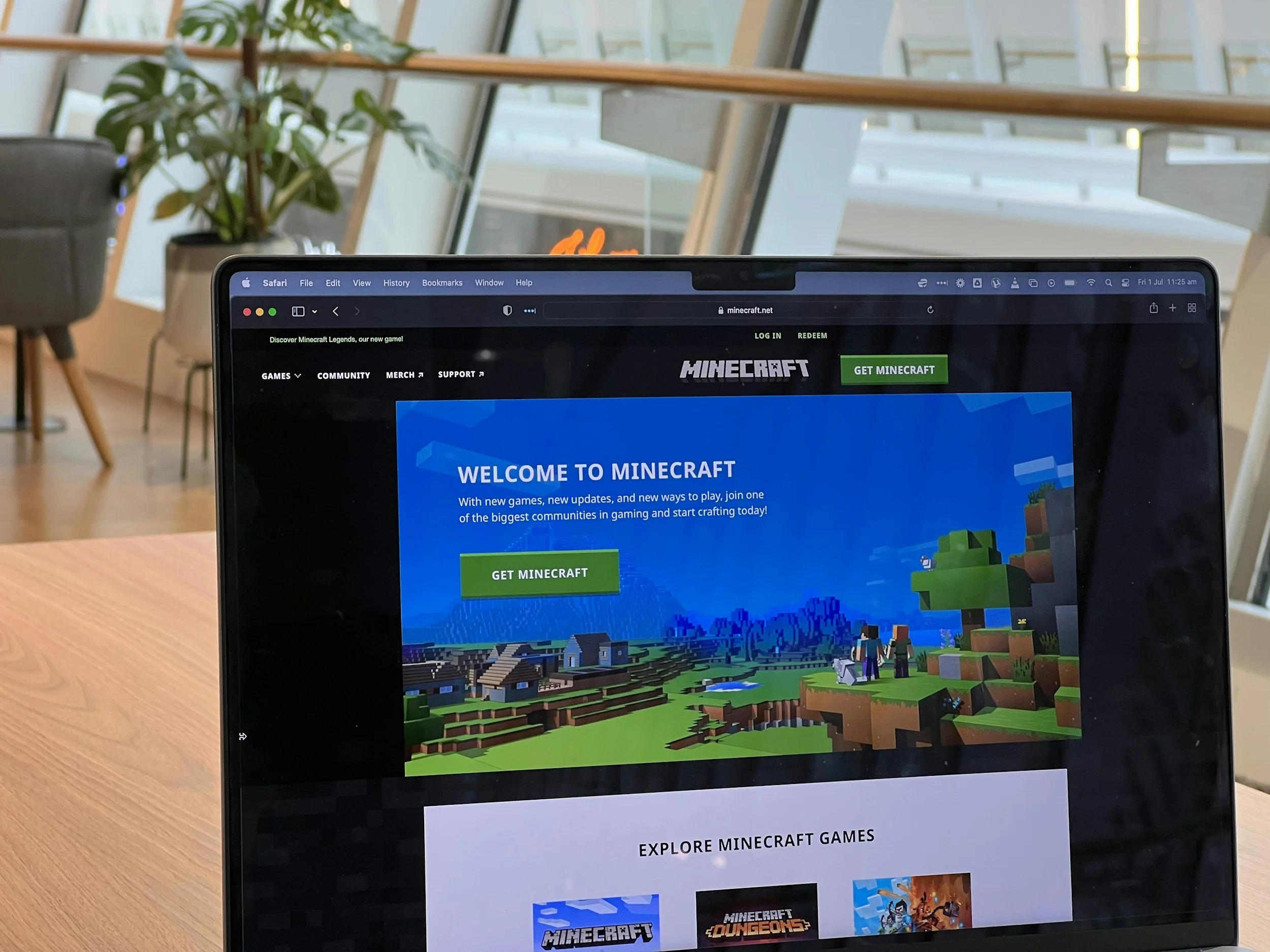
Minecraft: A game I can get behind.
But here’s the most telling piece of this research — and one worth remembering the next time you’re desperate for a mom break: Studies from the Journal of Family Psychology suggest that parental stress levels are a stronger predictor of household conflict than screen time itself.
In other words, a depleted parent creates more tension than a child playing a video game within healthy limits.
Looking back on those two weeks, I can see how I was existing in my own quiet chaos — disrupted routines, visual overstimulation from decorations and gift piles, a nostalgic urge to bake and create meaningful moments, irritation at boredom, and a desire for solitude paired with the belief that I needed to be with my kids no matter how anyone felt. So, when I subconsciously prevented computer/video games, perhaps as an extension of my ongoing battle to keep my kids emotionally detached from gaming, I actually fostered even more disorder and conflict because both parties needed an outlet, a quietness, a reasonable break that gaming provides,and I had never acknowledged before.
Faith, Disorder, and Discernment in Motherhood
Franciscan friar and author Richard Rohr, across several of his works — including Everything Belongs and Falling Upward — argues that Jesus did not point people toward God through moral perfection, control, or having life figured out. Instead, Jesus consistently revealed God in the places we least expect — weakness, failure, and human limitation. So, when I took a recovery walk to reflect on the chaos of winter break and that fleeting crazy thought of "could video games have helped", I found God in the disorder of my situation.
Faith doesn’t promise clean systems or predictable outcomes. It asks us to stay awake, to remain responsive, and to trust God more than fear-based narratives about control and what it means to be a present parent.
I don’t have to force myself into my kids’ space to prove my love. Jesus withdrew. He rested. He didn’t heal everyone. He didn’t meet every demand. And yet, He was fully present.
I also don’t have to take culture’s lead in deciding what’s best for me or my kids. Faith invites discernment, not depletion. Galatians reminds us not to grow weary in doing good—but doing good doesn’t mean doing everything "right".
I can tell you that since early January, my perspective has shifted. With a little bit of research for this post—and a lot of faith, I no longer cringe at the request to play video games. In fact, during a recent snow day, I suggested they grab their tablets and crawl into their living room forts for a little while, so I could work.
What I’ve Learned About Screen Time, Stress, and Grace
I don’t have a perfect formula for screen time. For now, it looks like a twice‑a‑week privilege tied to regular expectations—reading at night, helping with chores, and showing up well in daily routines.
But here's my takeaway:
Grace doesn’t only live in silence.
Sometimes it lives in the background hum of a video game while you fold laundry, cook dinner, or simply breathe.
Sometimes it lives in letting go of the need to be superhuman—and trusting that God is at work in the chaos.
Go Deeper: Companion Episode + Heart Check 💖
✨If this reflection on faith, motherhood, and parenting in a digital age resonated, you can listen to the companion podcast
Episode 08: What an Accidental Gaming Fast Taught Me About Escape, Numbing, and Motherhood.
Gracefully Unraveled is a podcast and blog for spiritually curious moms who feel lost in motherhood—gentle, faith‑friendly reflections that untangle identity, emotions, mental load, and burnout so they can parent with more presence and grace. Learn More